Moles are common skin growths formed when melanocytes — the cells that produce skin pigment — cluster together instead of spreading evenly. While most moles begin as small, flat spots, they often darken to brown or black over time, particularly with sun exposure. According to the American Academy of Dermatology (AAD), the average person has between 10 and 40 moles on their body. Most are harmless — but in rare cases, they can become malignant if not detected and removed in time.
Facial moles, in particular, can appear at any stage of life. While many people embrace them as beauty marks, others find them bothersome or wish to remove them for cosmetic reasons. A mole on the face can affect self-confidence, interfere with daily grooming like shaving, or cause discomfort when irritated by jewelry, clothing, or makeup.
Today, medical options such as laser therapy, cryotherapy, and surgical excision are widely available. But for those who prefer a gentler, more natural approach, home remedies remain a popular starting point. These methods aim to gradually lighten or shrink the mole without invasive procedures.
Important: Not all moles are harmless. Some can be early warning signs of skin cancer. Before attempting any home remedy, have your mole evaluated by a dermatologist. With that essential step in mind, let's explore the natural approaches — and their real limitations.
Different Types of Facial Moles
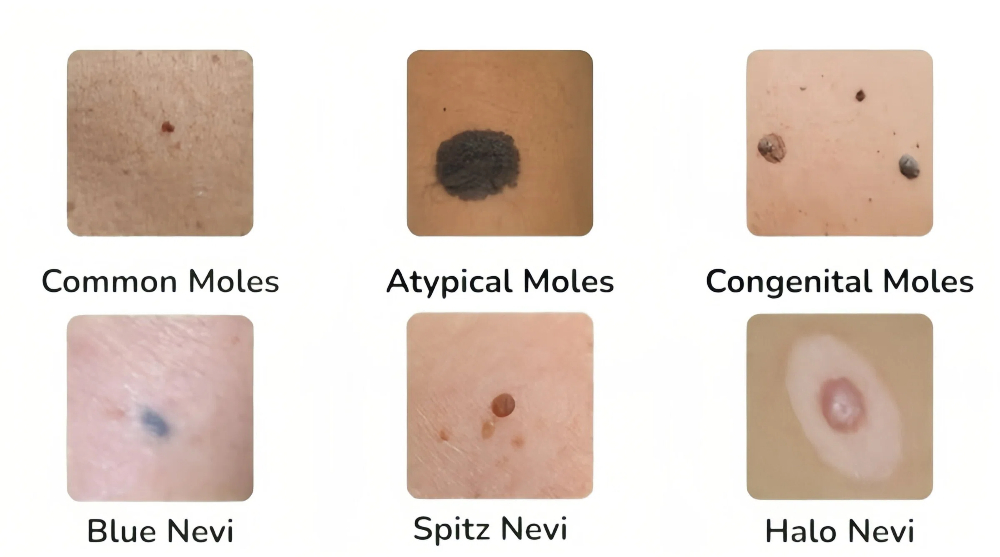
Understanding what type of mole you're dealing with is critical before considering any treatment. Here's a quick reference guide:
|
Mole Type |
Description / Appearance |
Risk Level |
Common Facial Locations |
|
Common Moles |
Small, round, and light to dark brown in color, usually less than 6 mm in diameter. |
Low |
Can appear anywhere on the face. |
|
Atypical Moles |
Larger than typical moles, often irregular in shape and uneven in color, generally over 6 mm in size. |
Moderate to High |
Commonly found on the nose and cheekbones. |
|
Congenital Moles |
Present from birth; tend to be large, irregularly shaped, and may range from 1.5 cm up to 20 cm. |
Moderate |
Often seen on the forehead or scalp. |
|
Blue Nevi |
Blue or bluish-black in color due to deeper pigment cells; usually small, round, and slightly raised. |
Low |
Appear mostly on the cheeks and scalp. |
|
Spitz Nevi |
Pink, red, or brown in color, sometimes resembling melanoma in appearance. |
Moderate |
Typically found on the cheeks, nose, or bridge of the nose. |
|
Halo Nevi |
Moles surrounded by a lighter, depigmented ring (halo) around them. |
Low |
Common near the temples and forehead. |
What Causes Moles to Appear on the Face?
If you've ever wondered why moles develop on your face specifically, the answer lies in a combination of factors — some you can control, and some you can't.
1. Genetics
Your DNA is the strongest predictor of how many moles you'll develop and what types they'll be. If one or both parents have numerous moles, you're statistically more likely to as well.
2. Sun Exposure
Ultraviolet (UV) radiation from sunlight is one of the most powerful triggers for mole formation. Overexposure not only increases the number of moles but can also darken existing ones — which is why facial moles are so common, given the face receives constant sun exposure.
3. Hormonal Changes
Fluctuations during puberty, pregnancy, and menopause can stimulate new mole growth or alter existing ones. While these changes are usually benign, they should still be monitored.
4. Skin Type
Individuals with fair or lighter skin are more prone to developing moles because their skin has less natural protection against UV damage. Consistent sunscreen use is the single most effective preventive measure.
5. Age
Moles typically begin appearing in early childhood and adolescence. New moles can continue forming until around age 40, after which existing moles may fade, lighten, or change subtly over time.
Understanding these causes empowers you to take preventive steps — sun protection and regular skin checks are your best defense against both unwanted moles and potential skin health issues.
Precautions Before Trying Natural Remedies
Natural does not always mean safe. Some home remedies can do more harm than good — particularly on the delicate skin of the face. Before you begin, keep these critical points in mind:
- See a dermatologist first. If your mole shows any unusual changes — growth, bleeding, color shifts — do not attempt to treat it at home. It needs professional evaluation.
- Always patch test. Many natural remedies are acidic or potent. Test on a small area of skin away from the face before applying to the mole.
- Never use force. Cutting, burning, or aggressively scratching a mole at home can cause infection, permanent scarring, and even stimulate abnormal cell growth.
- Set realistic expectations. Natural remedies work slowly — if they work at all — and rarely remove a mole completely. At best, they may lighten it over time.
5 Natural Remedies for Fading Facial Moles
Here are the most commonly discussed home remedies for mole reduction, along with honest assessments of their risks and limitations.
1. Apple Cider Vinegar (ACV)
Apple cider vinegar contains acetic acid, which is thought to help dry out and exfoliate mole tissue gradually.
How to use:
- Dilute ACV with equal parts water.
- Soak a cotton ball in the solution and place it directly on the mole.
- Secure with a bandage and leave on for no more than 30 minutes.
- Rinse thoroughly with water. Repeat once daily.
⚠️ Risk warning: Using undiluted ACV can cause chemical burns, permanent scarring, and infection. Always dilute properly and avoid prolonged skin contact. If stinging or redness intensifies, discontinue immediately.
2. Garlic Paste
Garlic contains natural enzymes that some believe can break down pigment clusters and help moles fade.
How to use:
- Crush a fresh garlic clove into a fine paste.
- Apply a thin layer directly to the mole.
- Cover with a bandage and leave overnight.
- Wash off thoroughly in the morning.
⚠️ Risk warning: Garlic is highly irritating and can cause redness, burning sensations, and even blistering. Apply a thin layer of petroleum jelly around the mole to protect the surrounding skin. Discontinue if irritation persists.
3. Castor Oil and Baking Soda
This combination is commonly recommended in home remedy circles: castor oil soothes while baking soda is thought to help dry out mole tissue.
How to use:
- Mix a few drops of castor oil with a small pinch of baking soda to form a paste.
- Apply to the mole and cover with a bandage overnight.
- Repeat daily for several weeks.
⚠️ Risk warning: This remedy is based entirely on anecdotal evidence with no scientific backing. Baking soda's alkalinity can disrupt the skin's natural pH barrier, potentially causing irritation or burns. Do not expect rapid or dramatic results.
4. Aloe Vera Gel
Aloe vera is known for its soothing and skin-healing properties. While it won't remove a mole, it may help gently lighten pigmentation over time.
How to use:
- Extract fresh aloe vera gel from a leaf.
- Apply directly to the mole and surrounding skin.
- Leave on for 30 minutes, then rinse off.
- Use twice daily for best results.
Safety assessment: This is the safest and most skin-friendly option on this list. Aloe vera carries minimal risk of irritation and is well-tolerated by most skin types.
5. Tea Tree Oil
Tea tree oil is valued for its antimicrobial and clarifying properties, and some believe it may help reduce mole pigmentation.
How to use:
- Dilute 1–2 drops of tea tree oil with a carrier oil such as coconut or jojoba oil.
- Apply the mixture to the mole twice daily using a cotton swab.
⚠️ Risk warning: Never apply undiluted tea tree oil to the skin — it can cause significant irritation, redness, and dryness. Always dilute before use.
Signs Your Mole Needs Medical Attention
If a mole begins to change in color, size, or shape, it could be an early warning sign of skin cancer. Moles that start to itch, develop a red outline, or bleed should never be ignored and must be examined by a dermatologist. Your skin specialist can assess whether the mole is harmless or requires removal.
Dermatologists often follow the ABCDE rule to evaluate potentially risky moles:
● A – Asymmetry: One half of the mole doesn’t match the other.
● B – Border: Edges appear uneven, blurred, or irregular.
● C – Color: Contains multiple shades or uneven pigmentation.
● D – Diameter: Larger than about 6 mm (roughly the size of a pencil eraser).
● E – Evolving: Shows noticeable changes in shape, size, color, or symptoms over time.
Professional Methods for Mole Removal
If natural remedies aren't delivering results — or if you'd prefer a faster, medically supervised approach — here are the most common professional treatments available today:
1. Surgical Excision or Shaving
A dermatologist uses a sterile scalpel to carefully remove the mole. The treated area is then cauterized or covered with an antibiotic ointment to control bleeding and reduce the risk of infection.
2. Full Excision with Stitches
This method is preferred for flat or deeper moles. After sterilizing and numbing the area, the mole and a small portion of surrounding skin are cut out with a scalpel, and the wound is closed with stitches for proper healing.
3. Cryotherapy (Freezing)
Liquid nitrogen is applied to the mole using a spray or cotton swab. The intense cold forms a blister, causing the mole tissue to die and eventually fall off as the skin heals.
4. Electrocautery
This technique removes the mole using controlled electric current, which burns and destroys the mole tissue with minimal bleeding.
5. Laser Mole Removal
A quick and relatively painless procedure that targets mole pigment using concentrated light energy, effectively breaking down and removing the mole tissue without cutting the skin.
For professional-grade mole removal tools designed for clinic use, explore Mychway's range of mole remover pens and spot removal devices.
Takeaway
The desire to remove facial moles naturally is understandable — but the reality is that no home remedy has been scientifically proven to eliminate moles safely and completely. Most natural methods work on the surface at best, and at worst, they can lead to scarring, infection, and delayed skin cancer diagnosis.
If mole removal is your goal, it should always be pursued under medical supervision. A dermatologist can evaluate the mole using dermatoscopy, rule out malignancy, and recommend the most appropriate evidence-based treatment — whether that's cryotherapy, laser removal, or surgical excision.
In the meantime, the two most effective things you can do for your skin are simple: wear sunscreen daily and schedule regular skin checks. Healthy, mole-free skin starts with prevention — not risky shortcuts.
Frequently Asked Questions
1. Can natural remedies completely remove a mole?
No. There is no scientific evidence that any natural remedy can fully remove a mole. At best, some methods may lighten the mole's appearance over time. Complete removal requires professional medical treatment.
2. How long do natural remedies take to show results?
Most natural remedies require weeks to months of consistent application — and even then, results are unpredictable and often minimal. If you see no change after 4–6 weeks, the method is unlikely to work.
3. Is it safe to remove a mole at home?
Home mole removal — especially using cutting, burning, or caustic substances — is never recommended. These methods carry a high risk of infection, scarring, and missed skin cancer diagnosis. Always consult a dermatologist first.
4. What is the safest way to remove a facial mole?
The safest approach is professional removal by a dermatologist using laser therapy, cryotherapy, or surgical excision. These methods are precise, minimize scarring, and allow the tissue to be examined for malignancy if necessary.
5. How do I know if my mole is cancerous?
Use the ABCDE rule: check for Asymmetry, irregular Borders, uneven Color, Diameter over 6mm, and Evolution (changes over time). If any of these apply — or if the mole bleeds, itches, or crusts — see a dermatologist immediately.
6. Can moles grow back after removal?
In some cases, yes. If mole cells remain beneath the skin after treatment, the mole may partially regrow. This is more common with shaving or laser methods than with full surgical excision. A dermatologist can advise on the best method to minimize recurrence risk.