Dealing with acne can already feel like a constant struggle, but for many people, the challenge doesn’t end when breakouts disappear. Stubborn acne can leave behind marks such as dark spots, redness, or even small indentations, especially after larger or persistent pimples. These marks can sometimes develop regardless of whether you pick at your skin or leave it untouched.
While acne scars are not harmful to your health, they can still affect how you feel about your skin, making many people look for effective ways to fade or improve their appearance. Fortunately, with advancements in skincare, there are several approaches that can help reduce their visibility and one of the most talked-about ingredients is salicylic acid.
But does it actually work for acne scars, or is it only effective for treating active breakouts? In this guide, we’ll explore how salicylic acid works, whether it can help fade acne scars, and what kind of results you can realistically expect from using it.
What Is Salicylic Acid?
Salicylic acid is a beta hydroxy acid (BHA) used in skincare to treat acne and prevent clogged pores. It is oil-soluble, which allows it to penetrate inside pores and help keep the skin clearer over time. It is commonly found in cleansers, toners, serums, and spot treatments for acne-prone skin.
How Does Salicylic Acid Work on Acne?
Salicylic acid works by entering the pores and breaking down excess oil, dead skin cells, and debris that lead to acne. By keeping pores clear, it helps reduce blackheads, whiteheads, and inflamed breakouts while gently improving overall skin texture.
What Are Acne Scars, Types and How They Form?
While salicylic acid helps manage acne and prevent clogged pores, acne scars are a different skin concern that develops after deeper damage has already occurred. Acne scars form when inflammation from severe or prolonged breakouts disrupts the skin’s natural healing process, leading to either changes in texture or color.
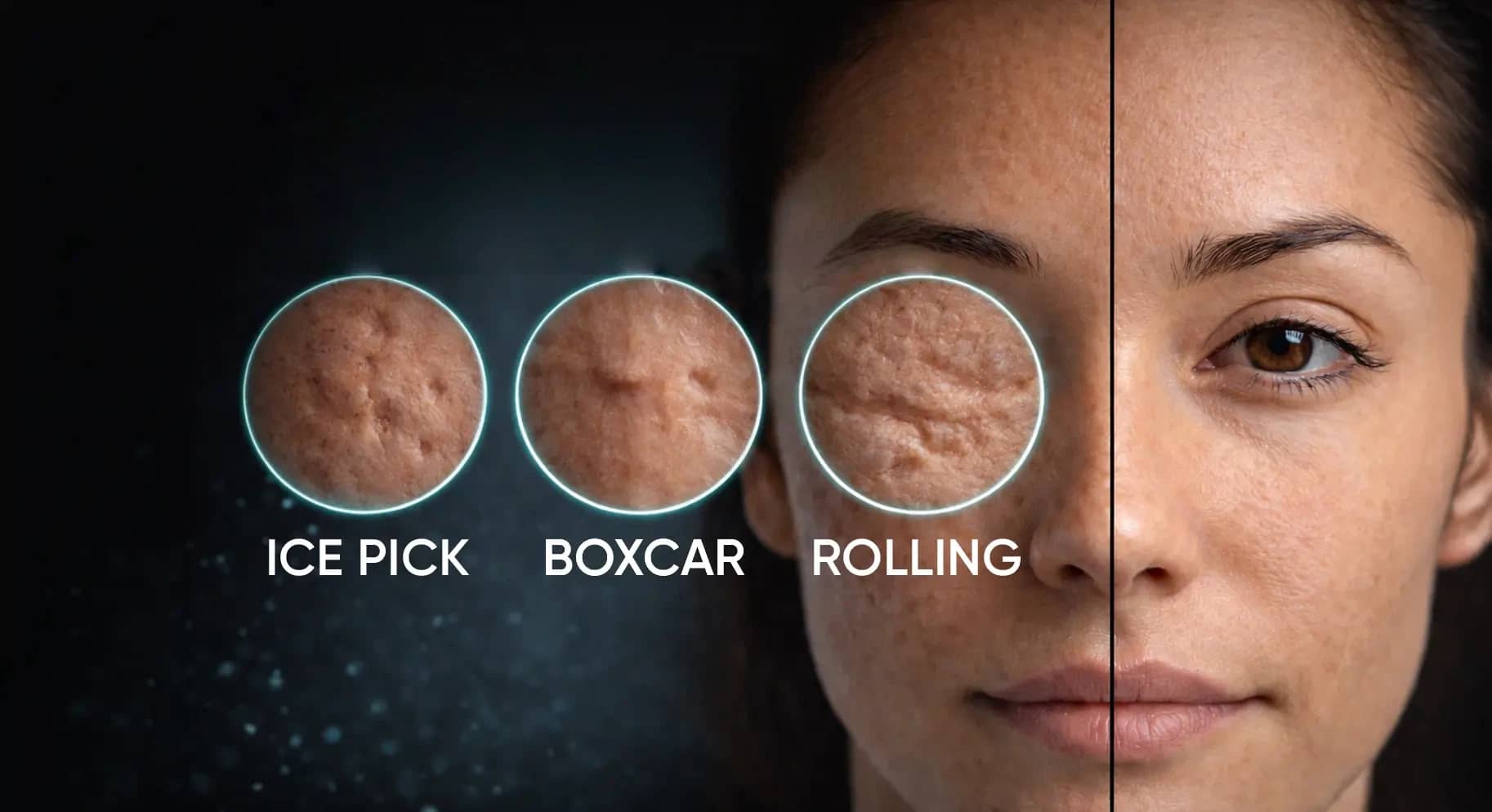
Acne scars are generally divided into three main categories:
1.Atrophic (depressed) scars are the most common type. These appear as indentations in the skin and form when there is a loss of collagen during healing. They include:
- Ice pick scars: small, deep, and narrow pits
- Boxcar scars: wider, defined depressions with sharp edges
- Rolling scars: uneven, wave-like depressions with sloping edges
2.Hypertrophic and keloid scars are raised scars that form when the body produces excess collagen during healing. These are more common on areas like the chest, shoulders, jawline, and back, and can sometimes extend beyond the original acne site.
3.Post-inflammatory hyperpigmentation (PIH) is often mistaken for scarring but is actually flat discoloration left behind after acne heals. These dark or red marks are caused by excess melanin production and usually fade gradually over time.
Each type responds differently to treatment while some surface-level marks may improve with skincare ingredients, deeper structural scars usually require more advanced approaches.
Does Salicylic Acid Help With Acne Scars?
Salicylic acid can help improve mild acne scars and marks, especially surface-level discoloration, but it cannot fully remove deep or indented scars.>
Where It Works Best
Salicylic acid is most effective for:
1. Post-inflammatory hyperpigmentation (dark spots)
2. Post-acne redness (PIE)
3. Mild uneven skin texture
In these cases, it helps fade discoloration by promoting regular skin cell turnover and keeping pores clear, which also prevents new breakouts that could worsen existing marks.
Where It Has Limited Effect
Salicylic acid is less effective for:
1. Deep atrophic scars (ice pick, boxcar, rolling scars)
2. Raised hypertrophic scars
These scars involve structural damage beneath the skin, which cannot be repaired through exfoliation alone.
In simple terms, salicylic acid supports skin resurfacing and tone improvement, but it does not rebuild lost collagen.
How Salicylic Acid Helps Fade Acne Marks
Salicylic acid doesn’t erase acne scars, but it can significantly improve the appearance of post-acne marks by targeting the skin’s surface and supporting its natural renewal process. As a beta hydroxy acid (BHA), it penetrates into pores and helps remove buildup that contributes to uneven tone and dullness.
1. Promotes Gentle Exfoliation
Salicylic acid helps loosen and shed dead skin cells, allowing fresher skin to surface. This gradual exfoliation improves overall clarity and reduces the buildup that can make acne marks look more visible.
2. Helps Fade Dark Spots Over Time
By encouraging regular skin cell turnover, it slowly reduces the appearance of post-inflammatory hyperpigmentation (dark spots). This process helps even out skin tone with consistent use.
3. Improves Skin Smoothness
With continued use, salicylic acid can refine the skin’s surface by keeping pores clear and reducing rough, uneven texture often left behind after breakouts.
4. Calms Ongoing Inflammation
Salicylic acid also has anti-inflammatory properties, which help reduce lingering redness and prevent new breakouts that could worsen existing marks.
Timeline for Visible Results
Results vary depending on skin type and consistency of use, but general improvements may appear as follows:
● 2 - 4 weeks: Skin feels smoother and less congested
● 6 - 8 weeks: Gradual fading of dark spots begins
● 3+ months: More even tone and improved overall clarity
Salicylic acid works best when used consistently as part of a routine. Its benefits are gradual, focusing on surface renewal, tone correction, and prevention of new breakouts, rather than fast or dramatic scar removal.
Best Ways to Use Salicylic Acid for Acne Scars
Using salicylic acid correctly is essential for improving acne marks safely and effectively. When used in the right form and frequency, it can support clearer skin and help gradually reduce post-acne discoloration.
Choose the Right Product
Salicylic acid is available in different skincare formats, and the choice affects how strong the results will be:
● Cleansers: Mild option with short contact time, better for maintenance than treating scars
● Leave-on toners or exfoliants: More effective because they stay on the skin longer and allow deeper penetration
● Serums and spot treatments: Best for targeting specific dark spots or problem areas
Leave-on products generally deliver more noticeable improvements in skin tone compared to wash-off formulas.
Recommended Routine
To avoid irritation while still seeing results, it’s important to introduce salicylic acid gradually:
● Start with a low concentration (0.5%–2%)
● Use it 2–3 times per week at first
● Slowly increase frequency if your skin tolerates it well
Overuse can lead to dryness or sensitivity, so consistency is more important than intensity.
Combine With Supporting Ingredients
Salicylic acid works best as part of a balanced skincare routine. Pairing it with complementary ingredients can improve results and reduce irritation:
● Niacinamide: Helps calm redness, strengthen the skin barrier, and improve uneven tone
● Sunscreen (SPF 30+ or higher): Essential for preventing dark spots from becoming darker and protecting healing skin
The effectiveness of salicylic acid for acne scars depends not only on the product itself but also on how consistently and carefully it is used within a complete skincare routine.
Side Effects and Precautions
Salicylic acid is generally considered safe for most skin types when used correctly, but like any active ingredient, it can cause mild side effects—especially when overused or introduced too quickly into a routine.
Possible Side Effects
Some people may experience:
● Dryness or tightness of the skin
● Peeling or flaking, especially during early use
● Mild irritation, redness, or sensitivity
● Increased sensitivity if over-applied or combined with too many actives
These effects are usually temporary and often indicate that the skin barrier needs more support or a slower introduction to the ingredient.
How to Use Salicylic Acid Safely
To minimize irritation while still getting results for acne marks:
● Start slowly: Begin with a low concentration and use it a few times per week instead of daily application
● Moisturize regularly: A good moisturizer helps maintain the skin barrier and reduces dryness caused by exfoliation
● Use sunscreen daily: Salicylic acid can make skin more sensitive to the sun, and UV exposure can worsen acne marks
● Avoid over-layering actives: Do not combine too many strong exfoliants or acne treatments at the same time, as this can lead to irritation and barrier damage
● Listen to your skin: If irritation persists, reduce frequency or pause use until the skin recovers
When used correctly, salicylic acid is a well-tolerated and effective ingredient for improving acne-prone skin. However, results depend on balanced usage, barrier protection, and avoiding over-exfoliation, rather than increasing strength or frequency.
Professional Treatments for Acne Scars
If over-the-counter products aren’t enough, professional treatments may help:
● Chemical peels
● Microneedling
● Laser therapy
● Subcision
These treatments work deeper in the skin to stimulate collagen and repair texture.
Takeaway
Clearer skin isn’t achieved through a single product it’s the result of consistent care, realistic expectations, and smart choices. Salicylic acid can support your journey by improving texture and fading marks, but lasting results come from a balanced routine, patience, and protecting your skin from further damage. Instead of chasing quick fixes, focus on building habits that support your skin’s natural renewal process because steady, thoughtful care always leads to more sustainable and visible improvement.